OSD course program

Mechanical Link: Perineum

Lecturer: Please select

Course facts

Requirements for participation

Completed osteopathy training

Course fee

594,00 

28 in stock

28 in stock

Course details

Course content

Course Description

Our passion for osteopathy regularly motivates us to deepen our knowledge and advance the treatment of our patients.
There is an anatomical area that our culture and/or our training seemingly leads us to neglect: the pelvic floor!
Although it is associated with vital functions (urination, defecation, reproduction) as well as mechanical functions (support function…), the pelvic floor is generally difficult to visualize, poorly understood, and often forgotten.
Even in our “osteopathic art,” it is often set aside or too complex to implement (internal techniques), leaving a gap in the overall understanding of our patients.
Neglecting an area or structure potentially deprives the therapist of one or more keys to solving a problem.
The continuous development of the LMO-Mechanical Link method conceived and developed by Paul CHAUFFOUR (Paul CHAUFFOUR-Eric PRAT Method) has in recent years given the pelvic floor a firm place in its examination system.
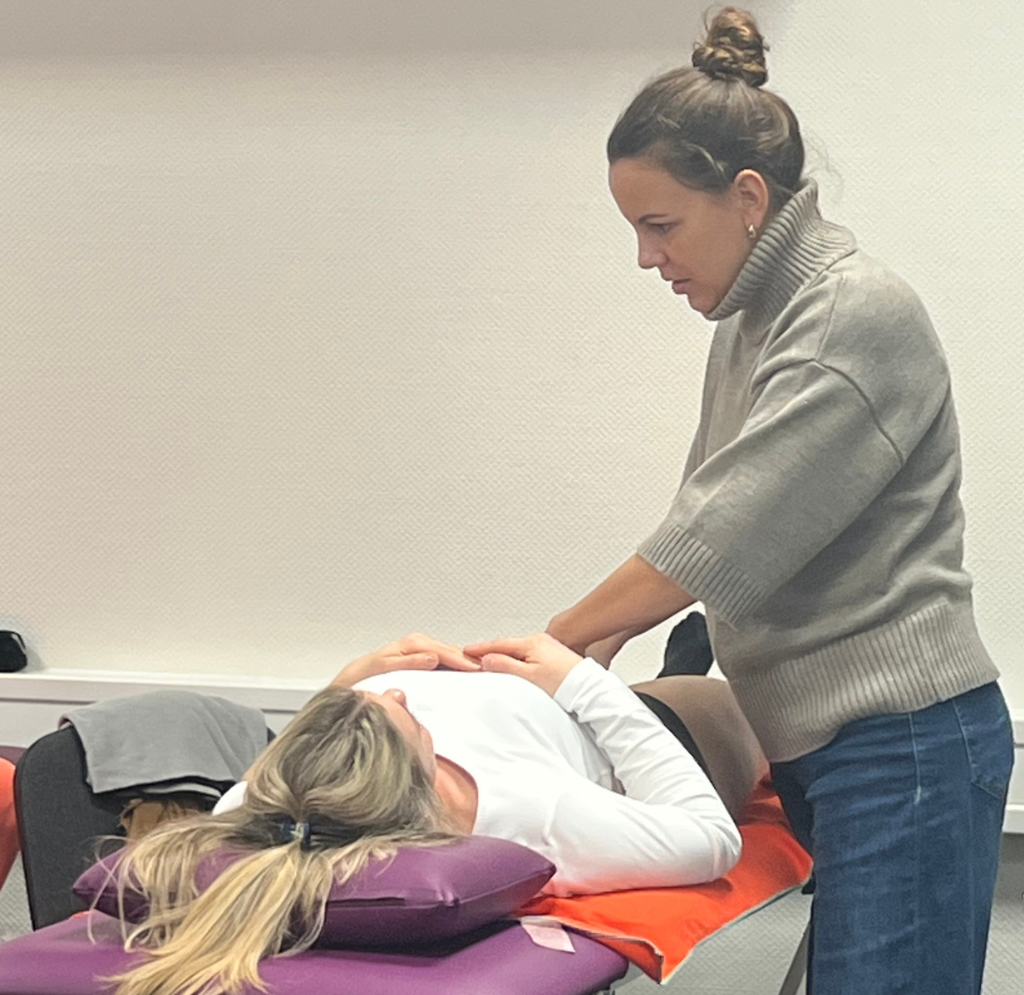
Following the principles of the Mechanical Link (systematic examination of anatomical structures, external access, determination of the total lesion, hierarchization of lesions, and treatment using the recoil technique), the examination can be performed in a simple, precise, and respectful manner.

Objectives:

  • Visualization and understanding of the anatomy of the perineum and pelvic floor
  • Their relationships to the pelvic organs
  • Their functions
  • Visualization and understanding of the abdominal cavity and its connections to the perineal area
  • Osteopathic assessment and treatment options according to the LMO methodology

DAY 1

MORNING

Practical Anatomy

  • Descriptive anatomy of the perineum and pelvic floor.
  • Physiology of continence (capacity, direction of contractions…)

Guided Practice
Prerequisites for external access to the perineal region

The posterior perineum:

  • Tests of the filum terminale, intraosseous hiatus, articular and bony coccyx, pelvic force lines
  • Access to the posterior perineum
  • Assessment (tests) of structures: anococcygeal raphe, sacrospinous ligament, sacrotuberous ligament, Alcock’s canal, pudendal neurovascular bundle
  • Rectal test via external access (dilation, posteriority, rectocele…)
AFTERNOON

Guided Practice (continued)

  • External examination of the cervix in the postpartum period.

Clinical Anatomy
We address the main causes of perineal damage:

  • Excessive strain (certain sports…)
  • Mechanisms of obstetric trauma (episiotomy, tears, fistulas, neurological damage, OASIS…)
  • Sexual violence
  • Emotional context (vaginismus…)

DAY 2

MORNING

Guided Practice
External assessment of anterior perineum structures:

  • Force line and periosteum of the ischiopubic ramus
  • global test of the anterior perineum (specific tests and analytical tests)
  • transverse perineal ligament, bladder, prostate, neurovascular bundle…
AFTERNOON

Theory and Guided Practice

  • Anatomy of the abdominal wall, synergy between abdomen and pelvic floor.
  • Assessment of osteopathic lesions of the abdominal wall in the postpartum period (dermis, fascia, diastasis of the linea alba…).

DAY 3

MORNING

Theory and Guided Practice (continued)

  • Epidural anesthesia, spinal anesthesia, assessment of the puncture site (dermis, spinal ligaments, vertebral segment).
  • The LMO concept: the total lesion, inhibitory balance, recoil.
AFTERNOON

Theory and Guided Practice
We will consider a proposal for regulation in the postpartum patient by assessing the following according to the LMO concept:

  • The bony pelvic framework (intraosseous, force lines, periosteum)
  • The articular pelvis (diastasis)
  • The organs of the pelvis and digestive tract
  • The pelvic nerves and arteries
  • The dermis and abdominal fascia
  • The perineum

Lecturer/s

Pierre Achery DO
Pierre Achery DO After completing his physiotherapy training in Grenoble (graduated 1993), he completed his osteopathic training at CIDO in Saint-Étienne from 1995 to 2001. In 2001–2002, he pursued further training in Lien Mécanique Ostéopathique (LMO). In 2003, he was co-opted as an assistant by Paul Chauffour. Since 2009, he has been an instructor for the Paul Chauffour and Eric Prat method, teaching internationally, including in Europe and Canada. Together with Eric Prat, he developed the LMO Masterclasses as well as topic-specific seminars. In his practice, he focuses on treating pregnant women and infants in interdisciplinary collaboration with gynecologists and midwives.

Course details

Course number

Number 27MC04PA Category ,

Info

Print

Course Information

Other OSD courses

Cookie-Einstellungen